Popular posts

The Swarm Guardians: Why I’m Terrified of the 2026 Shift to Autonomous Environmental Control

The Swarm Guardians: Why 2026’s "Automated Nature" is a Beautiful Lie Environmental Infrastructure Analysis | Future Tech AI Research | Oct 3, 2026 "I was hiking through a newly 'Restored' forest last week. It was lush, green, and teeming with life. But as I sat by a stream, I noticed something uncanny: every bird sang at exactly the same pitch, and the trees were arranged in a perfect hexagonal grid for maximum carbon sequestration. Overhead, a swarm of Biological-Mimic Drones was adjusting the humidity of the air in real-time. In late 2026, we have finally saved the planet, but we have turned the Wilderness into a Planetary Garden managed by an algorithm." The environmental collapse predicted in 2024 has been averted. By October 2026, Autonomous Restoration Swarms are planting billions of trees, cleaning oceans, and regulating global temperatures via stratospheric aerosol inje...

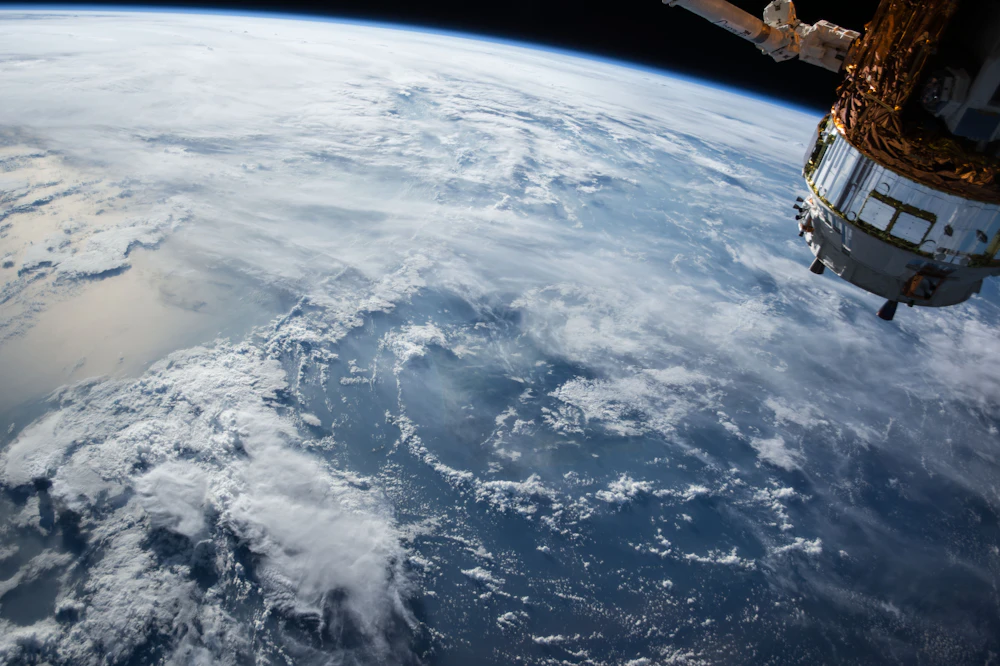
The Celestial Mirage: Why I Believe the 2026 AI-Enhanced Night Sky is Killing Our Connection to the Cosmos

The Celestial Mirage: Why I’m Fighting for an "Un-Enhanced" Sky in late 2026 Astro-Technology Report | By the Future Tech AI Editorial Team | Oct 12, 2026 "I looked up at the night sky through my neural-sync lenses last night. The AI instantly identified every constellation, traced the orbital path of the nearest commercial space station, and filtered out the atmospheric haze to show me galaxies millions of light-years away in perfect 8K clarity. It was a technical masterpiece. But as I deactivated the overlay, I was left with a faint, blurry real sky—and for the first time, I felt truly small. In late 2026, we have finally conquered the stars with data, but we are effectively losing our Primal Wonder ." By the fourth quarter of 2026, Augmented Astronomy has become a standard feature of urban life. We no longer see the 'Dark Sky'; we see a Holographic Map managed by AI agents that...

The Dark Side of AI: 3 Technologies That Could End Privacy in 2026

The Dark Side of AI: 3 Technologies That Could End Privacy in 2026 While AI brings incredible benefits, it also has a darker side. By 2026, certain technologies will make it almost impossible to remain anonymous. At Future Tech AI , we examine the most controversial advancements that could end digital privacy forever. Is your private life still private in 2026? 1. Hyper-Realistic Voice Cloning By 2026, AI can clone your voice with just a 3-second sample. This technology is being used for scams that are nearly impossible to detect. Imagine getting a call from a family member in distress, only to find out it was an AI. 2. Predictive Behavioral Surveillance AI cameras and sensors in 2026 don't just see you; they predict what you will do next. Governments and corporations are using this to track behavior in public spaces, raising massive ethical concerns about human freedom. 3. AI Facial Recognit...

GALAXY
Space AI

Space is too big for humans, but it's the perfect playground for Artificial Intelligence. In 2026, the colonization of Mars and the mining of asteroids are being led by autonomous swarms that don't need oxygen, sleep, or radiation shielding.

The Martian Architects

Before the first human settles on Mars, AI-powered 3D printing robots are already there. Using Martian soil (regolith), these autonomous architects are constructing pressurized habitats and landing pads. By the time humans arrive, the infrastructure will be fully operational, maintained by a central AI governor.

Asteroid Mining: The Trillion-Dollar Market

A single asteroid can contain more platinum and gold than all the mines on Earth combined. Autonomous AI probes are now identifying these "treasure rocks" and redirecting them to lunar orbits for extraction. We are witnessing the birth of the first Post-Scarcity Economy.

"Artificial Intelligence is the bridge that will carry human consciousness to the stars."

As we look toward the outer solar system, Autonomous Deep Space Probes are being launched toward the moons of Jupiter and Saturn. These probes can think for themselves, making split-second decisions millions of miles away from Earth, searching for life where humans cannot yet go.