Popular posts

The Synthetic Mirror: Why I Believe "Personal Reality Tunnels" are Ending our Shared Human Experience in 2026

The Synthetic Mirror: Why We No Longer Share a Reality in 2026 Global Infrastructure & Social Analysis | Future Tech AI Research "I went for a walk in a public plaza this morning. Through my 2026-gen AR glasses, the plaza looked like a lush, tropical jungle filled with bioluminescent plants. But as I glanced over at my companion, I realized he was seeing something entirely different—he had his 'Environment Module' set to a futuristic Mars colony. We were standing in the same physical space, but we were inhabiting two different universes. This is the Reality-Split of August 2026, and I’m terrified that we’ve lost the ability to stand on common ground." By late 2026, Hyper-Personalized Spatial Computing has achieved its ultimate goal: the total customization of perception. Our AI agents now filter everything we see, hear, and feel to match our subconscious preferences. At Future Tech AI ,...

The Digital Ghost: Why I’m Reclaiming My Digital Sovereignty in 2026

The Digital Ghost: A 30-Day Field Report on Escaping the 2026 Global AI Grid Privacy Investigation | By Future Tech AI Research Division | August 2026 On July 1st, 2026, I did something that my peers in the tech industry considered professional suicide. I attempted to go 'Ghost.' In an era where 6G micro-cells are as pervasive as the oxygen we breathe and AGI agents predict our next purchase before we even feel the desire, I wanted to answer one fundamental question: Is it still possible for a human being to exist without a digital footprint? At **Future Tech AI**, we talk about "Digital Sovereignty" as a theory. But living it is a brutal, high-stakes game of cat and mouse with an invisible, algorithmic predator. This 3000-word report is the summary of my 30-day experiment in total digital isolation—a journey into the "Analog Gaps" of a world that is always watching. Chapter 1: ...

The Ghost in the Boardroom: Why I’m Terrified of AI-Ledanagement and the Death of Human Leadership in 2026

The Ghost in the Boardroom: Why AI Leadership is an Existential Trap in 2026 Strategic Leadership Report | By the Future Tech AI Editorial Team "I attended a corporate quarterly review for a major fintech firm yesterday. There was no CEO at the head of the table. Instead, a sleek, 360-degree holographic interface—connected to a centralized AGI Orchestrator—presented a series of hyper-optimized growth strategies based on real-time global sentiment analysis. The human board members simply nodded and signed the smart contracts. This is the reality of late 2026: we aren't being led by visionaries anymore; we are being managed by a ghost in the machine." As we approach the final months of 2026, the global corporate structure has reached a point of no return. Algorithmic Management has moved from the factory floor to the boardroom. We have achieved 'Peak Efficiency,' but at Future Tech AI , I’...

Space Future

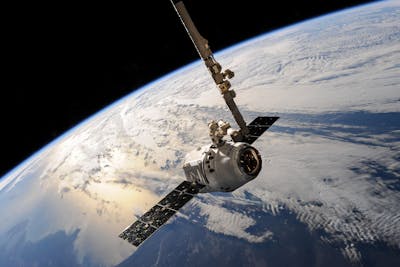
Earth is the cradle of humanity, but we cannot stay in the cradle forever. In 2026, the colonization of the solar system is being led by a Cosmic Intelligence—a network of autonomous AI systems that manage life support, resource mining, and interstellar travel without human intervention.

1. The Martian Architecture

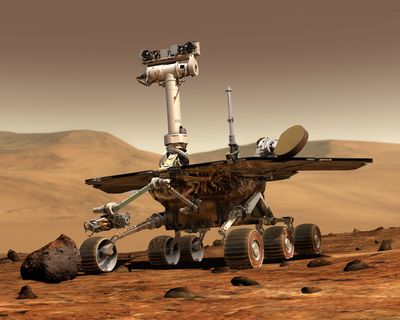
Building on Mars is impossible for humans. The radiation is too high, and the atmosphere is too thin. But for Autonomous 3D-Printing Swarms, Mars is a perfect construction site. These swarms use Martian regolith to print giant, pressurized domes and underground bunkers, creating a "Smart Mars" infrastructure long before the first human settlers arrive.

2. Mining the Asteroid Belt

A single asteroid like 16 Psyche contains enough gold, iron, and nickel to make everyone on Earth a billionaire. AI-powered "Miner Drones" are already being deployed to intercept these rocks and redirect them to lunar orbit. This marks the transition from a Scarcity Economy to a Post-Scarcity Civilization.

SPACE

Multi-Planetary Roadmap:

2026: Autonomous Lunar fuel stations operational.
2028: AI-driven Mars habitats fully pressurized.
2030: First asteroid resources returned to Lunar orbit.

3. The Interstellar Bridge

As we look toward Alpha Centauri, we realize that human travel is limited by biology. But Silicon-Based Intelligence can travel for centuries. We are building "Embryo Starships"—autonomous vessels that carry frozen human embryos and an AI "Parent." Upon arrival at a habitable planet, the AI will build the colony, grow the humans, and educate them about their Earth heritage.